This blog post is Part 2 of “Who is the woman in this photo?” Click here to read Part 1.
For starters, I’ve re-posted the photos discussed in Part 1 which I will continue to discuss in Part 2.
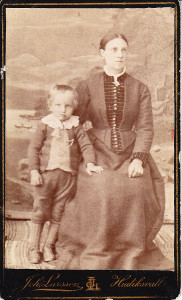
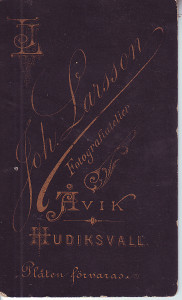
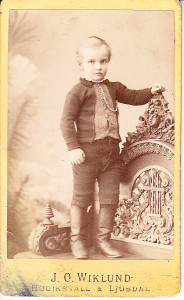
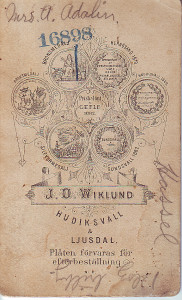
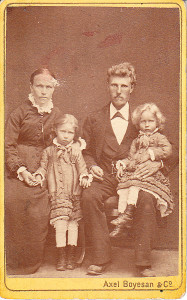
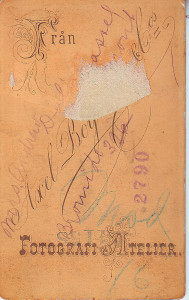
The next two steps involve my attempt to identify the type of photography and clothing style in order to place the photos in a particular time period.
STEP #1 – Identify and date photo type
With the help of this great website, PhotoTree.com, it was fairly easy to determine that all three photos are “carte de visite”, otherwise known as “CDV”. First appearing in 1859, CDV was the first process to use a glass negative – which meant that customers could afford to purchase several copies for sharing with family and friends.
Some hallmarks of CDVs are –
- Size: Typically 2 3/8″ x 4 1/4″, although the size may vary up to 1/4″.
- Corners: Square corners until 1870, then rounded corners.
- Image size: The more the image fills the card, the later the date. By 1874, the image completely filled the card.
- Thickness: Early cards were very thin but became thicker by 1870 and even thicker by 1880.
Conclusion: Since all three photos measure roughly 2 3/8″ x 4 1/4″, have rounded corners, large images, and the cards are very thick (although Photo #2 is thicker than the other two), it’s likely that Photos #1 and #3 are dated sometime after 1874 and Photo #2 after 1880.
STEP #2 – Identify and date clothing style
Next, I did some research regarding women’s fashion styles of the 19th century and came across this interesting article on the history of fashion, 1840-1900. The description of clothing in the 1880s seemed to be the closest match – tightly fitted bodice with narrow sleeves and high necklines.
Dresses in the prior decade (1870s) had more “flounces” and “ruching”, and low necklines were fashionable. By contrast, dresses in the next decade (1890s) were similar to the 1880s, except that the sleeve shape began changing in about 1893 – tight at the lower arm and puffed out at the upper arm.
Conclusion: Based on women’s clothing styles, Photos #1 and #3 are likely dated anywhere from the early 1880s through the early 1890s.
And then it happened – The “Ah Hah Moment!” when I realized that placing Photo #1 in the early 1880s through the early 1890s time frame meant that the woman in Photo #1 could be Brita. And if the woman was Brita, the small boy could be her son John. And perhaps John is also the boy in Photo #2?1
STEP #3 – Locate a record for “John”
I decided it was time to try and find some type of record for John. And I really lucked out here. It turned out Ancestry had recently acquired some Swedish records, so I easily located a birth record which I wrote about here – showing there was a baby boy named “Johan”, born to an “Andrew Dalin” and “Brita Johansdotter” in Hudiksvall, Sweden in 1887.2
Finally, everything seemed to be falling into place. My father’s story about the little boy named John appeared to be validated – and as a bonus, assuming the birth record is valid, I had possibly located a record indicating that Brita’s maiden name was “Johansdotter”.
STEP #4 – Now what?
I wasn’t sure what to do next – but as luck would have it, I came across the name of a woman who specializes in helping people analyze their family photos. Her web site is The Photo Detective and her name is Maureen Taylor. I scheduled a phone appointment and then emailed the following three photos:
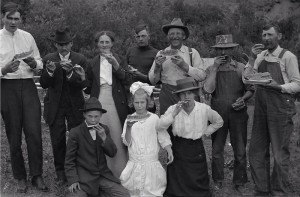
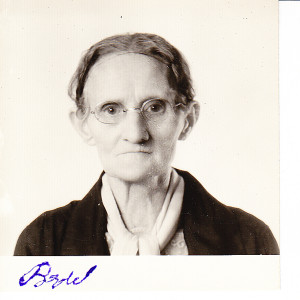
All the information I had about Photo #1 has been previously stated. Here’s some information about the other two photos:
Photo #2:
- The boy in the front row, Walter Dalin, was the son of Andrew and Brita Dalin.
- At least one of the other two girls, and possibly both, are daughters of Andrew and Brita.
- The man second from the left in the back row is probably Andrew and the woman standing next to him is probably Brita.
Photo #3:
- Several family members have identified this woman as Brita Dalin.
- The handwriting on that photo appears to be Brita’s handwriting (based on a few other examples of her handwriting).
This is the end of Part 2. Part 3 includes a report on my phone call with Maureen. Stay tuned!
Copyright (c) 2016, Lark M. Dalin Robart
FOOTNOTES
- As for Photo #3, I decided for the time being to set it aside because I am unable to place this family – presumably a family consisting of a wife and husband with two children (girls, boys or one of each??) – in any scenario, given the information I currently have for Brita and Andrew. Assuming this photo was taken during the same time period as Photo #1, the only scenario of which I can currently conceive is that the adult female or adult male is a sibling of either Brita or Andrew. Another research project for another day. ↩
- Sweden, Indexed Birth Records, 1860-1941, digital images, Ancestry.com (http://www.ancestry.com : accessed 04 April 2016), “Swedish Church Records Archive; Johanneshov, Sweden; Sweden, Indexed Birth Records, 1880-1920; GID Number: 100021.2.24500; Roll/Fiche Number: SC-1110; Volume: :937; Year Range: 1888, Johan Lars Anders Dahlin entry. ↩
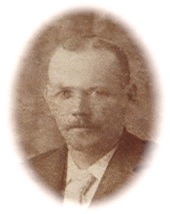
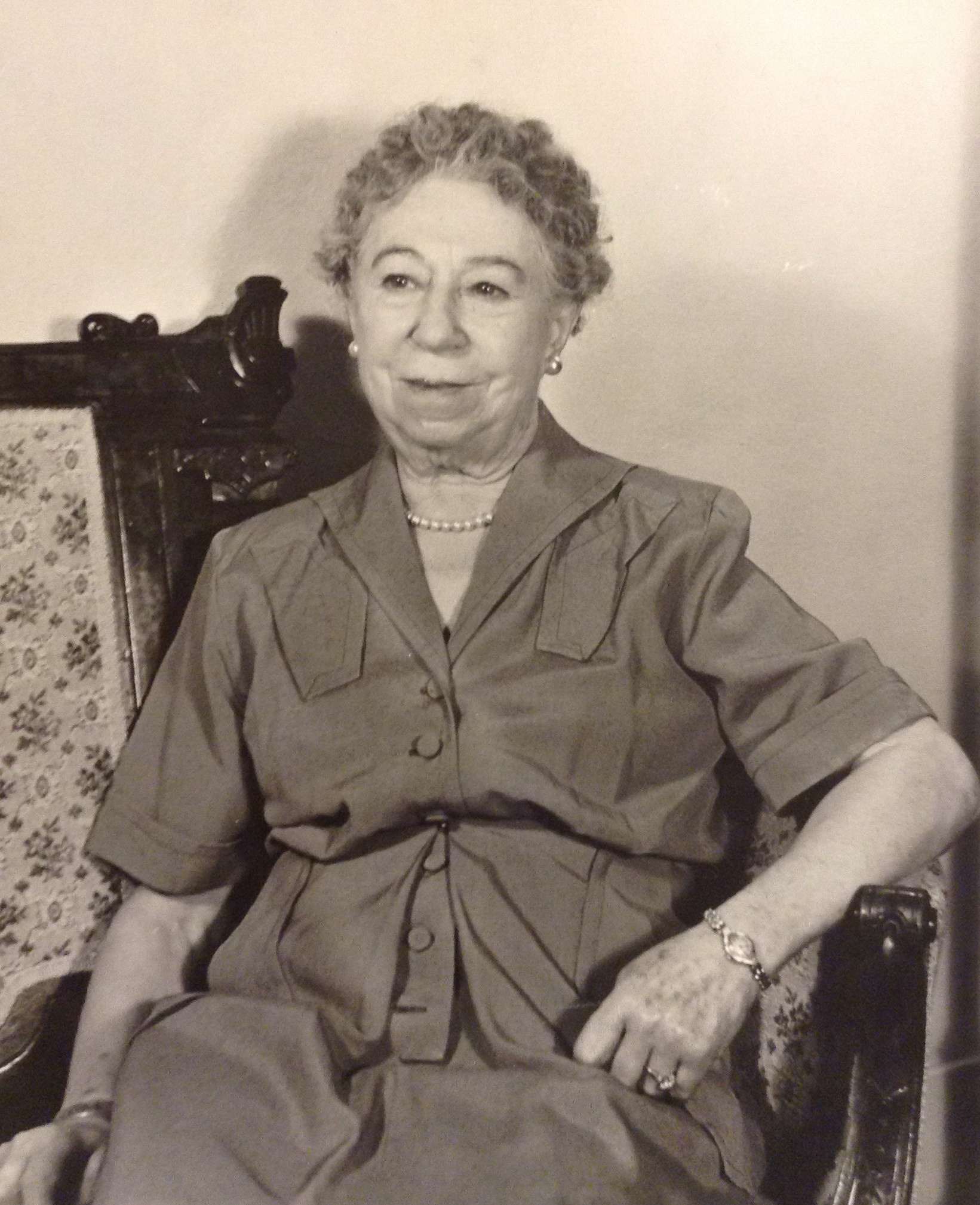 This is a photo of my grandfather’s sister, Katherine Rebecca Blacker – known in our family as “Aunt Kate”.